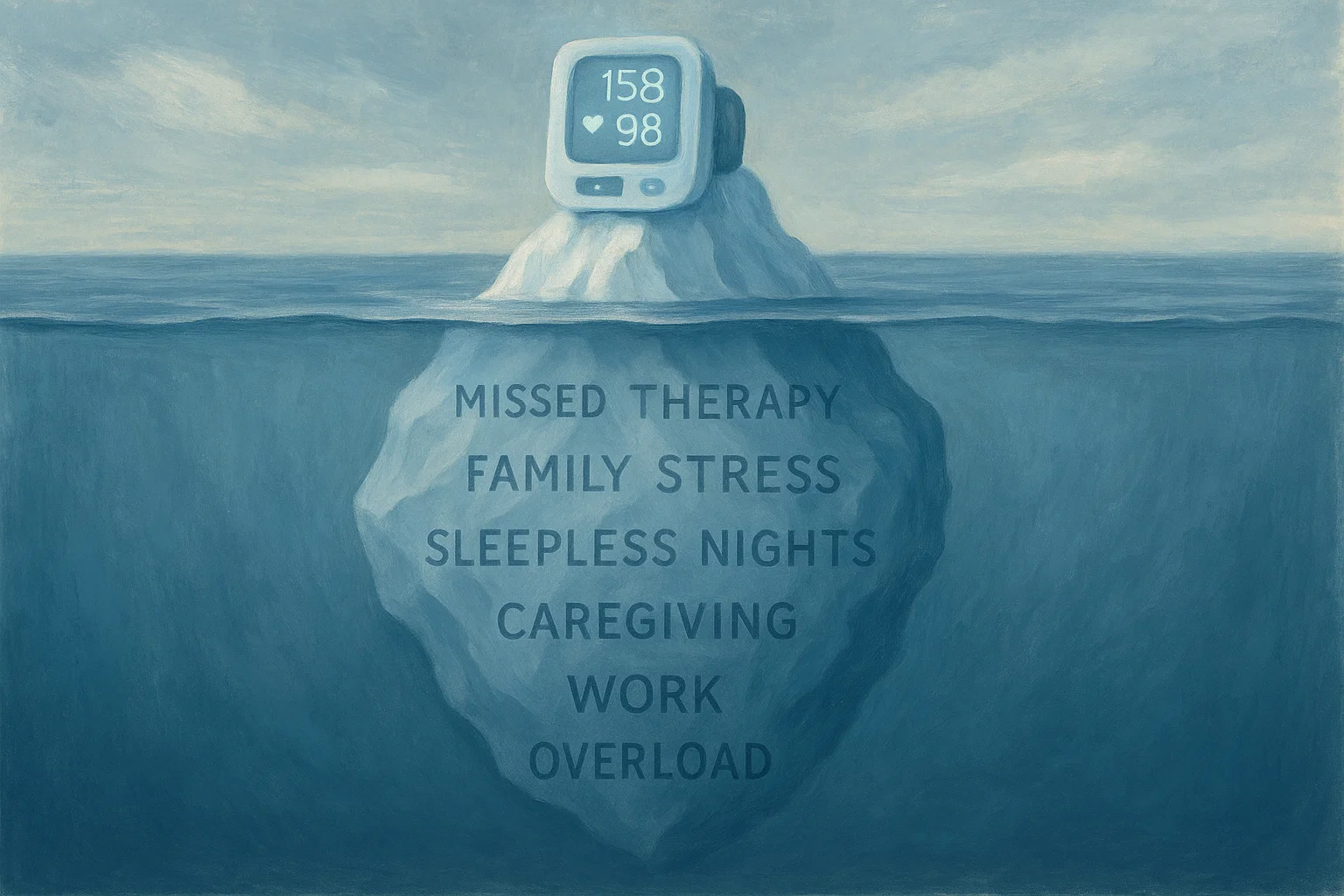
It starts with a data spike… a sudden drop in movement, a rise in reported pain. The alert pings the provider dashboard, hinting at deterioration. But what if that signal isn’t telling the whole truth? Below is a practical breakdown of what this means and what to do next.
What if that high pain score came after a week of poor sleep, emotional stress, or missed therapy due to caregiving demands? What if the numbers are accurate but the story they tell is incomplete?
Remote Patient Monitoring (RPM) is revolutionizing chronic care, but it risks becoming just another stream of disconnected metrics. Without patient context, what’s really going on behind the data, RPM can lead to unnecessary interventions, missed opportunities, and patients feeling like statistics instead of people.
Let’s look at why RPM needs more than numbers to be effective…and how to make it human again.
The Promise and Peril of RPM
RPM feels like the future. Wearables track blood pressure, glucose, heart rates, delivering real-time insights that catch problems early. CMS reports RPM use grew 200 percent from 2019 to 2023, reducing hospital visits for chronic conditions like diabetes by 20 percent. Doctors get alerts, patients stay home, and practice bill codes like 99457 for the effort. It seems like a clear win.
But there’s a catch. A 2024 Office of Inspector General report revealed 43 percent of Medicare RPM users didn’t receive the full scope of care: device setup, data collection, and treatment management. Data was collected, but care often stalled. Why? Numbers don’t tell the whole story. A spike in Sarah’s pain score could signal a flare-up or just a stressful week. Without context, providers make mistakes, patients feel overlooked, and resources are squandered. RPM’s potential depends on seeing the human behind the data.
The Data Trap: When Numbers Mislead
Data feels like truth. A heart rate of 120 beats per minute looks urgent. But was the patient exercising, stressed, or sick? Without context, RPM systems can turn normal life events into false alarms. When teams don’t capture stress, sleep, or social factors, they risk overreacting—or missing the real driver.
Billing suffers too. Practice administrators know RPM codes require documented clinical time each month. But if staff only react to readings without engaging patients, they miss billable care coordination and the note trails that support medical necessity. Data-driven care sounds advanced, but it falters without the human element.
Reframing RPM: Care, Not Just Data
Making RPM work means prioritizing humanity over tech. Start by inviting patients to share context with their data. Asking “What was happening when your readings spiked?” can change everything. Picture nurses guiding Sarah to log stress alongside pain scores, giving her doctor a clearer view.
Next, blend lifestyle factors into RPM platforms. Some systems now let patients note events like missed therapy or family stress. This contextual data helps providers interpret readings appropriately. Regular check-ins are just as vital. A quick call can clarify a data blip, like whether Sarah’s low activity was a health issue or a busy week.
Chronic conditions often intertwine with mental health. Pairing RPM with screening and referral pathways helps teams avoid “numbers-only” care that misses the human story behind symptoms. Finally, consider access. Some patients can’t reliably use app-based RPM every day. Offering phone-based check-ins and low-friction workflows helps include more patients without compromising documentation.
RPM Done Right
Take a real-life scenario: a patient’s RPM device flags rising pain and declining activity. Instead of immediately adjusting medications, a nurse reaches out. The patient shares that they’ve been dealing with a personal crisis and missed therapy sessions. With that context, the care team adjusts the plan…adding a counselor referral and support reminders…without jumping to conclusions. That one call, driven by data but rooted in understanding, keeps the patient on track. Their pain stabilizes, and they feel seen.
The Bigger Picture: Trust Over Tech
RPM’s future isn’t about smarter devices… it’s about trust. Patients want to feel seen, not reduced to numbers. Providers need tools that simplify care, not complicate it. Administrators want billing that flows. When RPM includes context (not just readings), patients tend to engage more and care teams make better, faster decisions. That’s the vision: technology that amplifies care, not overshadows it.
This matters beyond clinics. As value-based care grows, RPM will be judged on outcomes, not just data points. Practices that humanize RPM now will reduce avoidable utilization, lift satisfaction, and protect revenue.
The Catch: It’s Not Easy
Humanizing RPM requires effort. Training staff to engage patients takes time. Upgrading platforms to include context can be a real investment. Creating equitable solutions, like low-tech RPM, demands new workflows. But when RPM is operationalized well—clear medical necessity, clean documentation, and strong patient engagement—teams typically see smoother billing and better clinical follow-through.
Your Next Move
Transforming RPM starts with small steps. Add a prompt to your RPM system, asking patients what was happening during their readings, and review responses for a few patients to see how it shapes care. For the next RPM alert, call the patient to clarify, noting if it prevents an unnecessary visit. Train a nurse or coordinator to weave context into RPM reviews, tracking time and feedback after a month. Review last quarter’s RPM denials to spot missed care coordination and adjust workflows.
A practice that added patient check-ins cut denials by 10 percent in three months. These steps are simple but powerful, paving the way for care that’s as compassionate as it is smart. Share your thoughts below or try one idea and see the difference. Let’s make RPM human again.
Related resources: Remote Patient Monitoring (RPM) Guide (2026 Rules), The “Block Stretching” Trap: 99454 Compliance Guide.
Disclaimer: This article is informational only. Coverage, coding, and rates vary by Medicare Administrative Contractor (MAC) and payer plan.