Author: Justin Brochetti, CEO
Coverage year: 2026
Editorially updated: October 3, 2026
A home blood-pressure reading can prompt a useful treatment conversation—or send the team chasing a cuff-fit problem. The difference is the workflow behind the number: reliable measurement, an accountable reviewer, and a practitioner who can act on the findings. FairPath connects device data with the review queues and records that help your practice operate that workflow.
Key Takeaways
- Reliable measurement comes before interpreting a trend: cuff fit, technique, and patient attribution matter.
- The treating practitioner sets each patient's monitoring goal, review plan, and escalation instructions.
- Scheduled RPM review is not emergency surveillance. Patients need clear instructions for urgent symptoms and after-hours concerns.
- Setup, device data, and treatment-management work require separate billing evidence.
- FairPath supports numerous manufacturer integrations and practice-supplied devices, organizes the work, and surfaces missing evidence; your practice provides the clinical care.
Start With the Clinical Question, Not the Cuff
Home readings should help the practitioner answer a specific question. Is blood pressure responding to a recent treatment change? Are home measurements different from office readings? Are symptoms, adherence barriers, or adverse effects creating a need for earlier follow-up?
A patient whose blood pressure remains above the practitioner-defined goal might benefit from that visibility. So might a patient starting or changing medication. Enrollment should connect the readings to an expected care decision—not simply to a diagnosis on a patient list.
Before enrollment, establish:
- Purpose: What will the team learn, and how will it use the information?
- Ability: Can the patient measure reliably with the right cuff, education, language support, or caregiver assistance?
- Connection: Will the device transmit from the place where the patient takes readings?
- Coverage: Does the patient's payer support the intended service, practitioner, device, and setting?
- Capacity: Who reviews the data, and who covers that work when the usual reviewer is unavailable?
If those conditions are not met, address the barrier or choose another monitoring approach. Nonconnected home measurements can still inform care without being treated as qualifying RPM device-service evidence. Reassess continued enrollment when readings no longer affect the care plan.
Make the Reading Trustworthy
Choose a connected blood-pressure monitor with accuracy evidence for the intended population and a cuff that fits the patient's arm. The validated device listing is a useful starting point for accuracy review; it does not determine Medicare eligibility.
A standard adult cuff will not fit every patient. Record the exact model and supplied cuff size, demonstrate placement and positioning, and watch the patient take a reading. Use the American Heart Association's home-measurement guidance to support education, alongside the manufacturer's instructions and the practitioner's patient-specific plan.
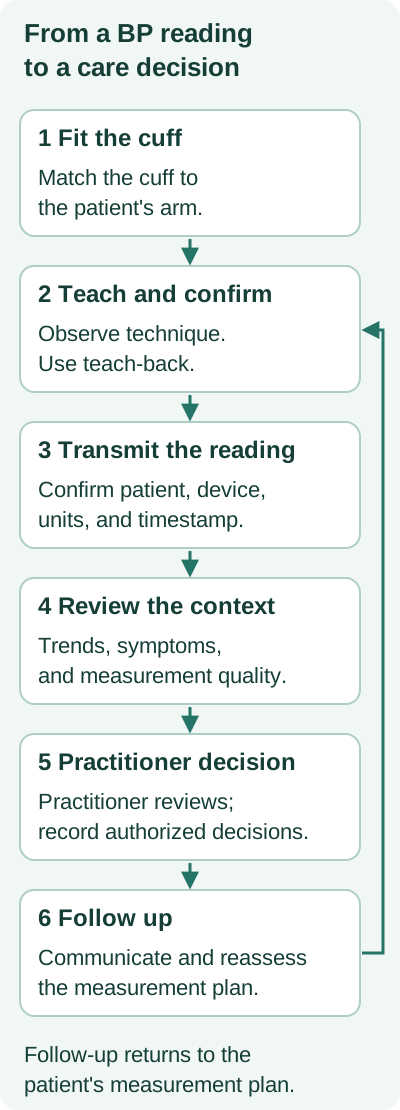
Cellular cuffs can reduce phone and pairing steps, but still need coverage at home. Bluetooth workflows depend on a compatible phone, app, permissions, and connectivity. Test the complete path: a reading should arrive in the correct patient's record with its device source, units, and timestamp.
A practical example: A patient sends unexpectedly high, inconsistent readings. During follow-up, the team discovers a poor cuff fit. It corrects the equipment and technique, records which measurements were questionable, and obtains reliable readings for clinical review. It does not silently delete inconvenient values or treat the dashboard as proof that medication needs changing.
Put Measurement and Escalation in the Same Plan
The treating practitioner should approve the measurement schedule and response plan together. A generic reading schedule or universal alert cutoff cannot account for each patient's symptoms, baseline, medications, and clinical context.
Keep the plan usable by answering five questions:
- When does the patient measure? Specify frequency, timing, positioning, and any relationship to medication or daily activities.
- When is a reading repeated? Define the technique check and repeat-measurement instructions for questionable data.
- What needs review? Identify patient-specific trends and symptoms that require routine, prompt, or urgent attention.
- Who responds, and when? Assign queue ownership, expected response windows, escalation authority, and backup coverage.
- What does the patient do outside those windows? Explain after-hours contact and when to seek urgent or emergency help rather than wait for dashboard review.
Confirm the patient understands the instructions through teach-back. Record the agreed plan where the reviewing team can find it, not only in enrollment paperwork.
Missing readings also need a response. Check whether the problem is technique, discomfort, battery, connectivity, or a changed care need before labeling it nonadherence. Technical support and clinical assessment are different tasks; route each to the appropriate team member.
Close the Loop on Medication Decisions
A queue is useful only if it leads to accountable follow-up. Permitted team members can prepare readings, resolve technical issues, and perform clinical work within their scope and the applicable supervision rules. The authorized practitioner evaluates the trend alongside symptoms, adherence, measurement quality, and the patient's clinical context.
The resulting decision might be education, further assessment, a medication change, or no change. Record what was reviewed, who made the decision, what the patient was told, and when the team will reassess. Software can organize this work; it does not independently prescribe or authorize treatment.
After a medication change: The patient measures under the updated plan. The team reviews the response and reported symptoms, routes concerns to the practitioner, communicates the authorized instructions, and documents follow-up. It evaluates billing support separately instead of assuming every month of clinically useful care supports every RPM code.
For the personnel distinctions, see who can bill RPM and who can perform the clinical work.
Medicare Coverage: Keep Three Evidence Layers Separate
Medicare RPM is a service, not a payment attached to a cuff shipment. Retain patient-specific medical necessity, consent, setup and education, device evidence, clinical work, and the applicable communication records.
| Service layer | Established codes | Evidence to review |
|---|---|---|
| Setup and education | 99453 | Qualifying setup and patient education under the applicable requirements |
| Device supply and data | 99454 | Qualifying device, automatic transmission, and the required data days and reporting period |
| Treatment management | 99457, 99458 | Permitted personnel, supported management work and time, and required interactive communication |
CY 2026 added shorter-duration device and management pathways. Use the 2026 RPM coding guide for code-specific thresholds and combinations, and the RPM practical guide for the surrounding requirements. A reading count, a data-day count, management minutes, and a communication record are not interchangeable.
For patients also receiving APCM or CCM, confirm compatibility and keep each service's work and evidence distinct. Do not count the same time twice. The APCM guide covers the broader primary-care management framework.
Use current CMS fee-schedule and payer information for reimbursement modeling. Include cuff replacement, connectivity, patient support, and clinical labor—not just the device-supply payment. The real cost of RPM, APCM, and CCM explains that operating picture.
Connected Blood-Pressure Cuffs, One FairPath Workflow
FairPath supports integrations with numerous device manufacturers for RPM and RTM, and practices can bring their own devices. For hypertension RPM, that typically means connected blood-pressure cuffs. Before enrollment, confirm the exact model and data pathway against the practice's accuracy, cuff-fit, and RPM requirements; a consumer wearable does not qualify by default.
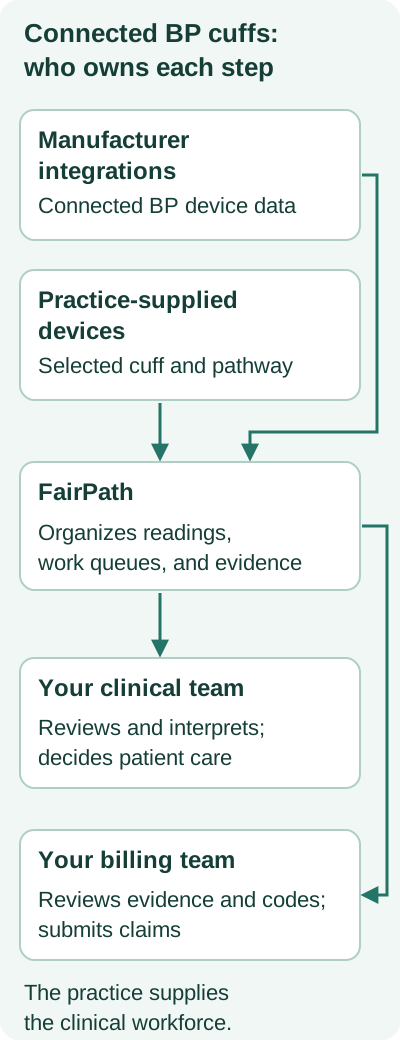
| Function | What your team owns | What FairPath records or surfaces |
|---|---|---|
| Cuff assignment and setup | Device qualification, accuracy evidence, cuff fit, consent, and education | Device assignment, cuff and setup records, and missing setup evidence |
| Readings and data quality | Measurement plan, questionable-reading decisions, and interpretation | Readings with their recorded source, transmission gaps, and quality notes |
| Review and escalation | Review timing, patient-specific parameters, coverage, and response | Review queues, escalation status, responsible roles, and unresolved work |
| Practitioner decisions | Assessment, medication authority, patient instructions, and follow-up | Decision records, communication, and linked follow-up documentation |
| Billing readiness | Code selection, overlap review, claim submission, and payer follow-up | Device evidence separate from management time and communication, with missing-element flags |
Your practice supplies the clinical workforce and owns medical necessity, interpretation, medication authority, and code and claim decisions. FairPath organizes, tracks, and surfaces the work and evidence; it does not guarantee coverage or payment.
See how the platform connects device data with practice-operated care.
Common Questions
Does Medicare cover RPM for hypertension?
A hypertension diagnosis alone does not establish coverage. The patient, qualifying device, documented service, personnel, and billing evidence must meet the applicable requirements. Review the setup, device-data, and management layers independently.
Can we use a patient's existing blood-pressure cuff?
Evaluate the exact model, accuracy evidence, cuff fit, and data pathway. A useful home cuff is not automatically a qualifying RPM device. Manually entered values can support clinical conversations without being counted as automatically transmitted device data.
How often should patients take readings?
Follow the treating practitioner's measurement plan. Frequency and timing should answer the patient's clinical question and account for treatment, symptoms, and practical ability to measure reliably—not simply maximize reading volume.
What should the team document after reviewing readings?
Record the readings and context reviewed, relevant symptoms or measurement concerns, the assessment and decision, who authorized it, patient communication, and follow-up. Preserve qualifying time and communication evidence separately for billing review. “BP reviewed” alone does not explain the care delivered.
Related FairPath Guides
- How to start an RPM program in a medical practice
- RPM practical guide: 2026 requirements
- 2026 RPM coding changes
- Who can bill RPM and perform the clinical work
- The real cost of RPM, APCM, and CCM
- APCM guide