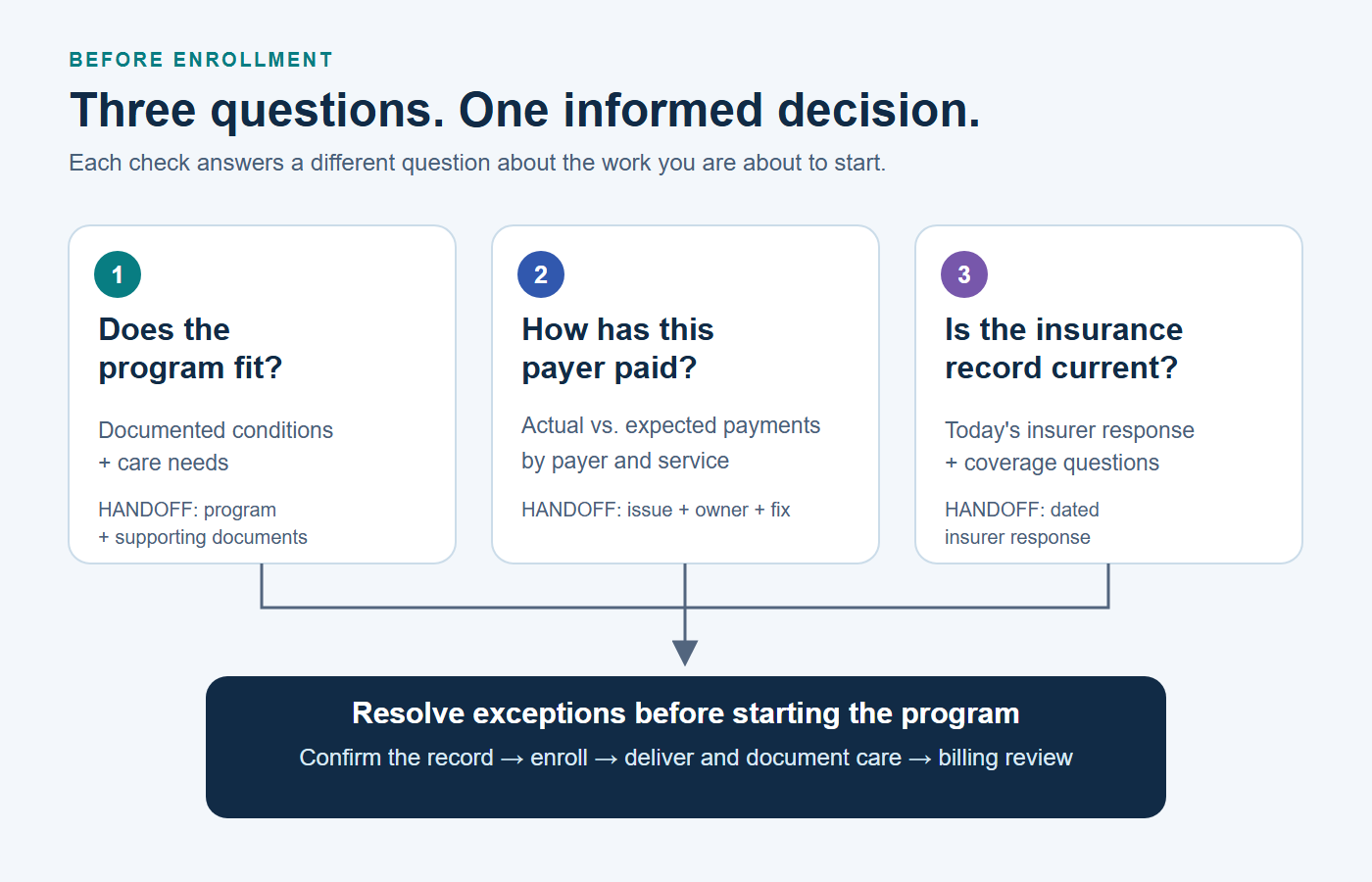
Stop Payment Problems Before the First Claim: FairPath's Three Checks for Remote Care
A denied claim arrives after your team has already done the work. Use three connected checks to catch avoidable enrollment and payment problems earlier.
Read MoreOperational guidance and analysis for APCM, RPM, RTM, and value-based care execution.
A denied claim arrives after your team has already done the work. Use three connected checks to catch avoidable enrollment and payment problems earlier.
Read More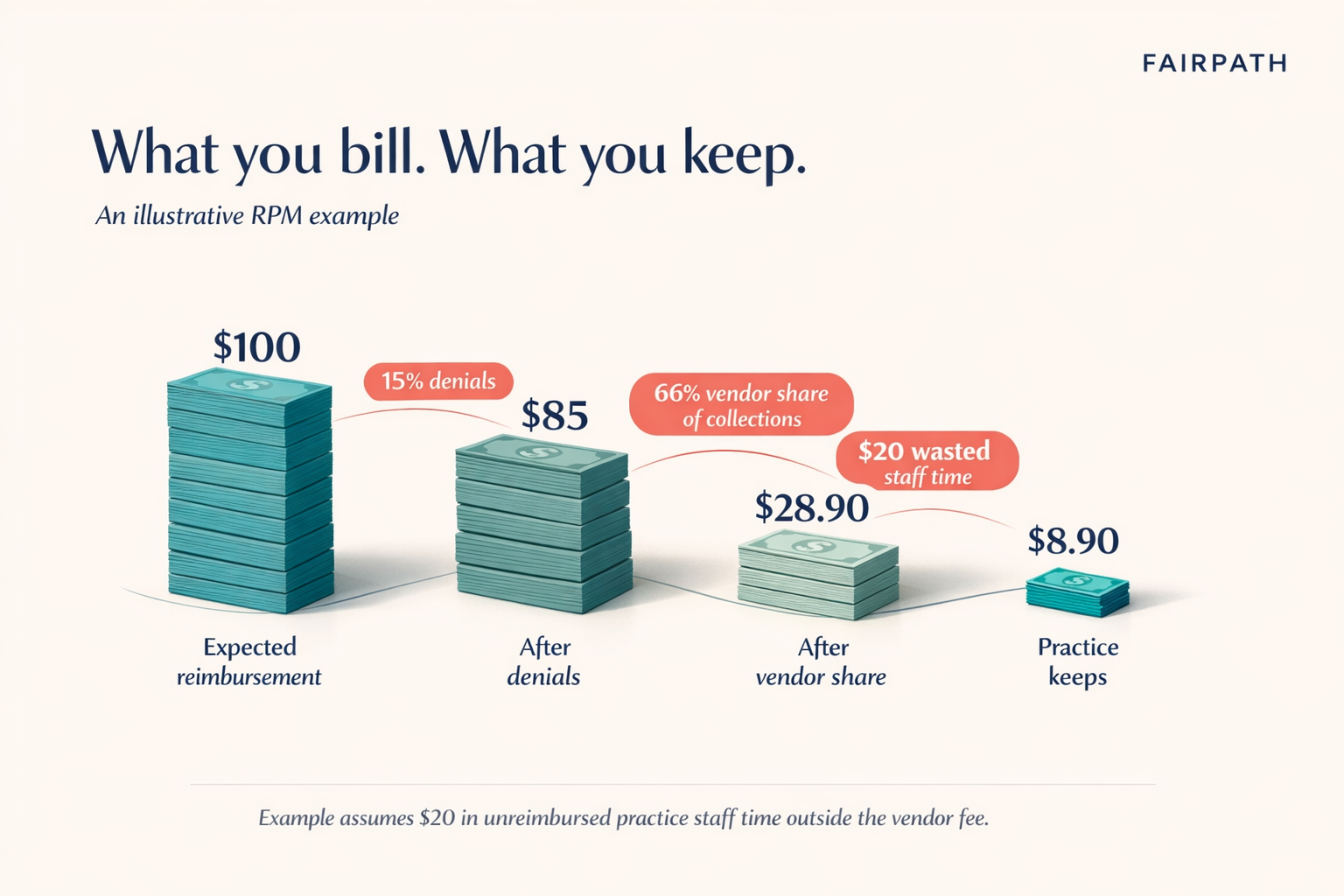
The costs of RPM, APCM, and CCM exist whether you outsource or run the program yourself. FairPath helps reduce wasted clinician time, manual work, and payment rework.
Read More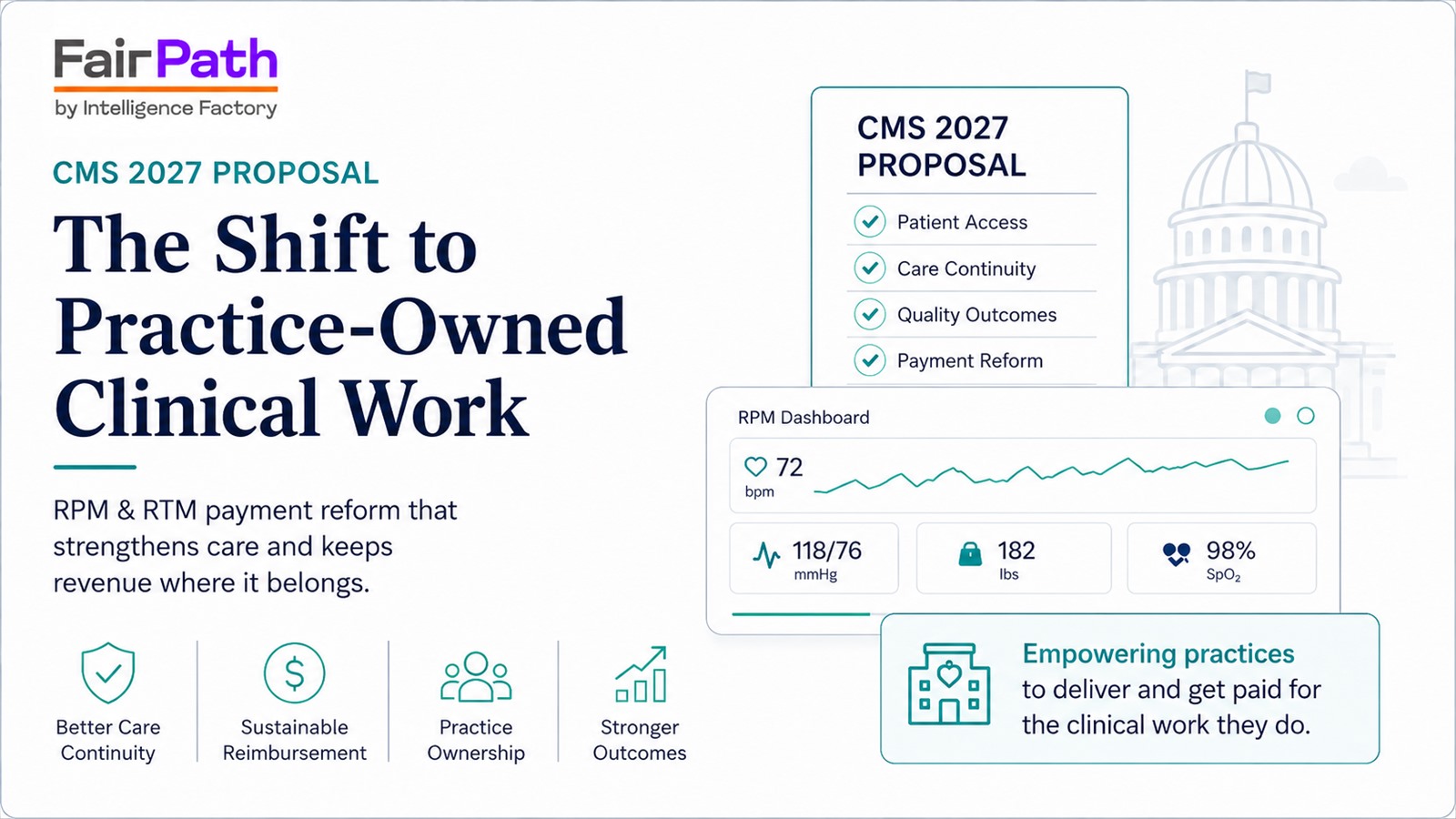
Your clinical team can run RPM and APCM without an outsourced clinical vendor. FairPath brings the readings, care plans, communication, and program requirements together.
Read More
For years, Physician Fee Schedule (PFS) rates were set using data from office-based practices. Starting in 2026, CMS will now use auditable cost data from Hospital Outpatient Departments (OPPS) to set the rates for some PFS technical services, explicitly in...
Read More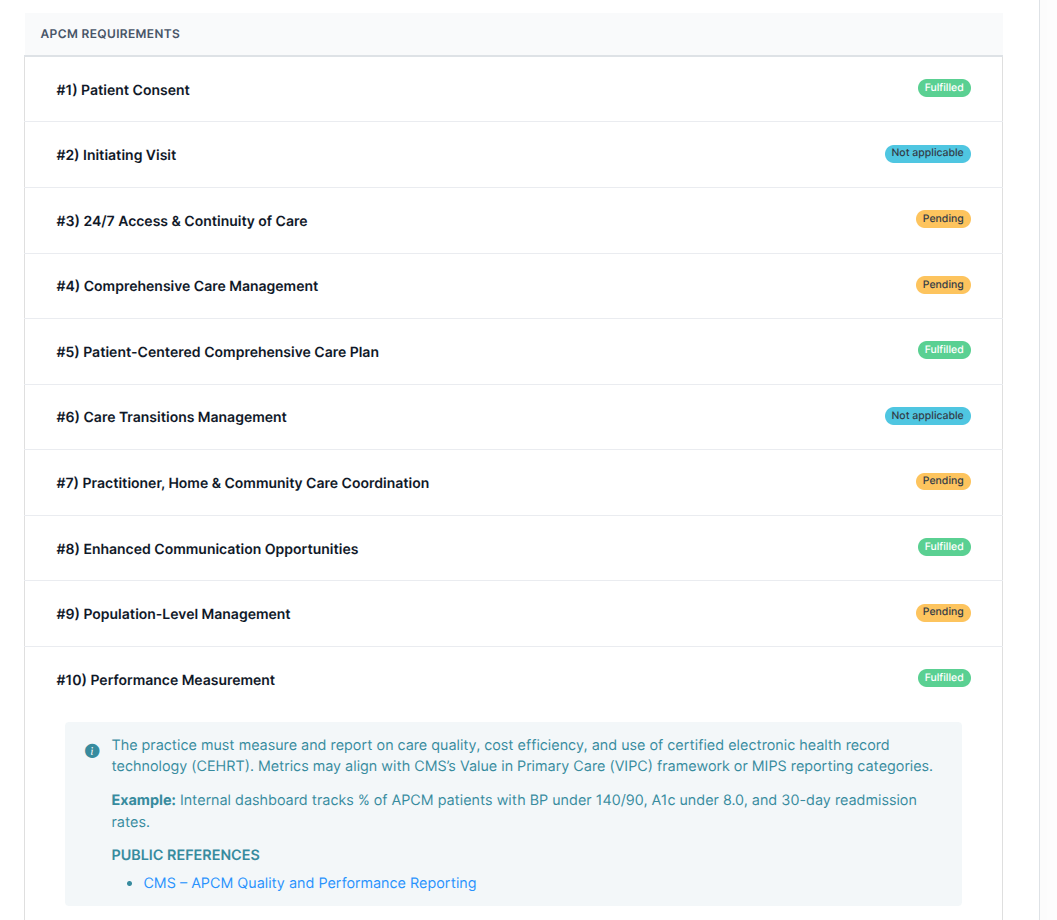
CMS has fused APCM eligibility, practitioner attribution, and continuity into a single monthly operating system. Billing without that coherence now creates denial and audit exposure. If you are treating these as three separate checkboxes, you are already be...
Read More
CMS permanently adopted virtual direct supervision for services furnished after December 31, 2025. That sounds like a green light for remote care management, but it is narrower than most practices think. It changes where the supervisor can be, not what can...
Read More
Independent pharmacies are being told they need to "diversify revenue." The default answer from industry consultants is telepharmacy - remote dispensing to underserved areas. That is a real business, but it is not the same business as clinical services re...
Read More
Eating disorders are not just a behavioral health problem. They are a chronic medical condition that requires ongoing primary care coordination, medical monitoring, medication review, nutrition support, family communication, and escalation planning. If your...
Read More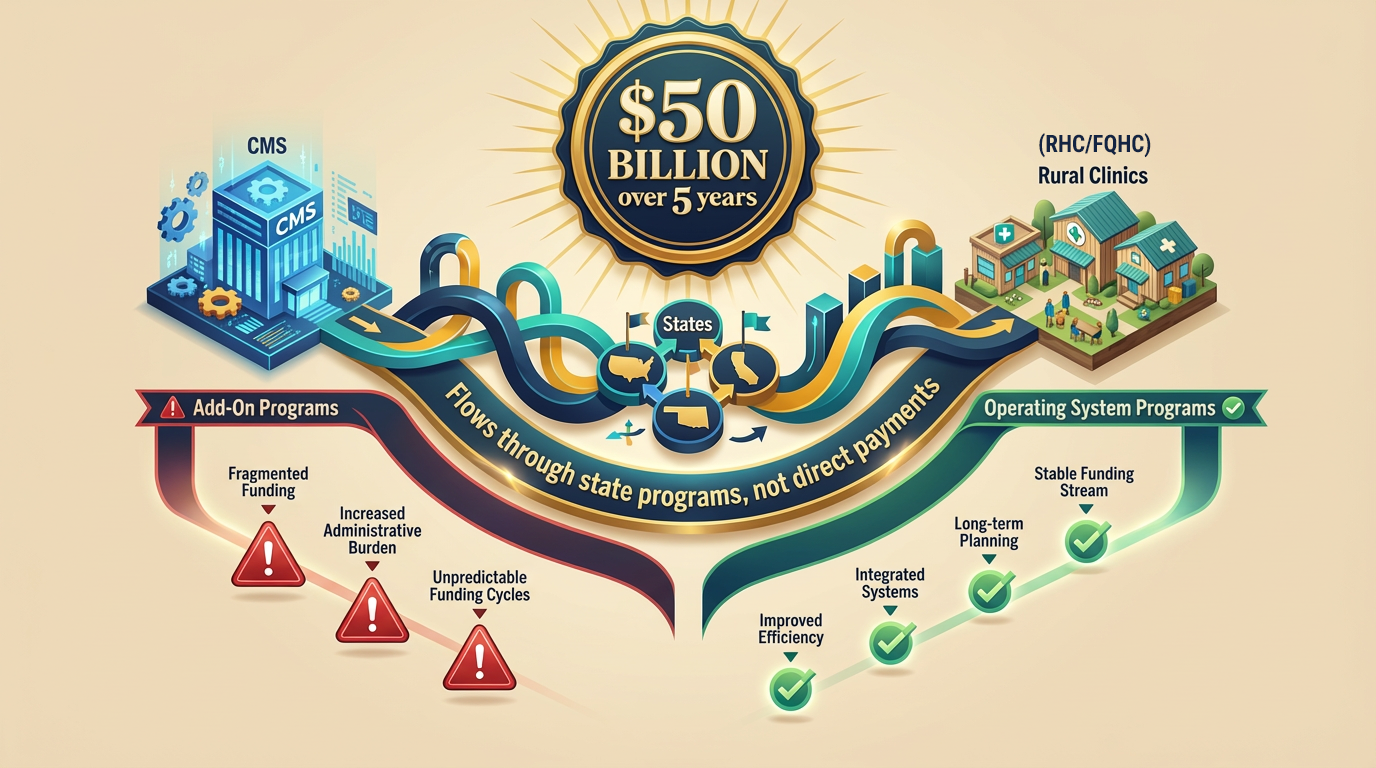
On December 29, 2025, CMS announced $50 billion in Rural Health Transformation (RHT) awards across all 50 states. This is a five-year initiative with $10 billion available each year from 2026 through 2030.
Read More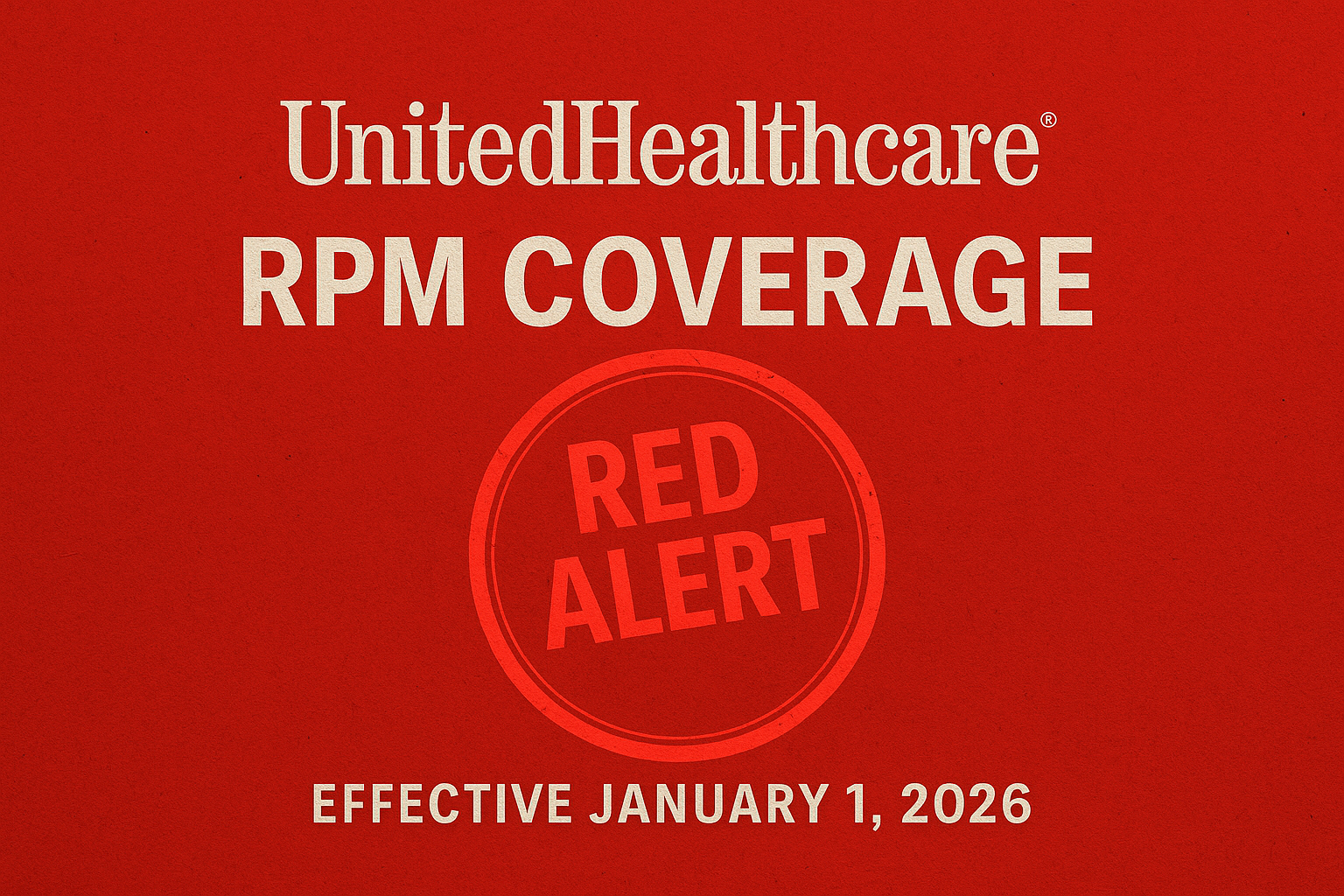
If you are billing RPM for Diabetes, Hypertension, or COPD under UHC, your claims will likely be denied starting January 1st.
Read More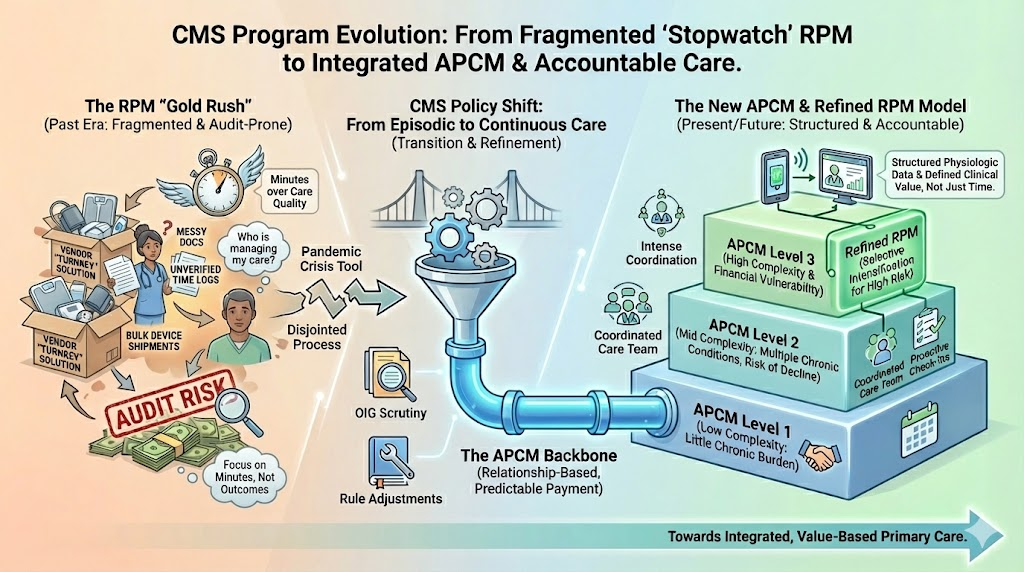
Originally published at: https://fairpath.ai/resources/cms-rpm-apcm-2025-26
Read More
Most independent practices didn’t launch remote care programs so they could track timers, chase scattered documentation, or argue with spreadsheets at the end of every month. They adopted RPM and CCM because they believed these programs would keep patients out of the hospital, c…
Read More
The CMS 2026 Physician Fee Schedule updates reshape how remote care coordination can be staffed, supervised, and reimbursed. Here’s what changed and how to operationalize it.
Read More
CMS is quietly reshaping how primary care teams can be paid for mental and emotional health support. Starting in 2026 (if finalized), practices using the new Advanced Primary Care Management (APCM) codes will be able to add small, monthly payments for behavioral health integra…
Read More
If your practice adopted APCM by shutting down RPM and RTM programs, you left money on the table. If you're running all three programs separately, you're burning cash on duplicate documentation and exposing yourself to compliance risk.
Read More
On January 1, CMS introduced a brand-new benefit called Advanced Primary Care Management (APCM), a monthly payment designed to roll up the core elements of care coordination under a single code. For primary care leaders, this changes the landscape in profound ways. APCM overlaps…
Read More
Advanced Primary Care Management (APCM) represents one of the more meaningful changes in the CMS Physician Fee Schedule. As of January 1, 2025, practices that adopt this model will be reimbursed through monthly, risk-stratified codes rather than only episodic, time-based billing…
Read More
Primary care is carrying more risk, more responsibility, and more expectation than ever. The opportunity is that we finally have a model that pays for the work most teams already do between visits. The risk is jumping into tooling and tactics before we agree on the basics. Advan…
Read More
The Federal Trade Commission’s Sept. 12 warning to healthcare employers is a simple message with real operational consequences. Overbroad noncompetes, no‑poach language, and “de facto” restraints chill worker mobility and can limit patients’ ability to choose their clinicians. F…
Read More
Advanced Primary Care Management (APCM) is Medicare’s newest program, introduced in 2025 with three billing codes: G0556, G0557, and G0558. This represents a pivotal shift toward value-based primary care by offering monthly reimbursements for delivering continuous, patient-focus…
Read More